Publication · 2026

Interfacial engineering for improving thermal conductivities of BNNS/PNF nanocomposite paper with superior electrical insulation and mechanical properties
AuthorsMingshun Jia, Lin Tang, Yuhan Lin, Xiaoxi Zeng, Kunpeng Ruan, Mukun Li, Yongqiang Guo, Mukun He, Yusheng Tang, Junwei Gu

publishedCoauthor.Journal of Materials Science & Technology 254, 126–134DOI: 10.1016/j.jmst.2025.08.020

Overview

A BNNS/PNF nanocomposite-paper study focused on interfacial thermal transport, electrical insulation, and mechanical performance.

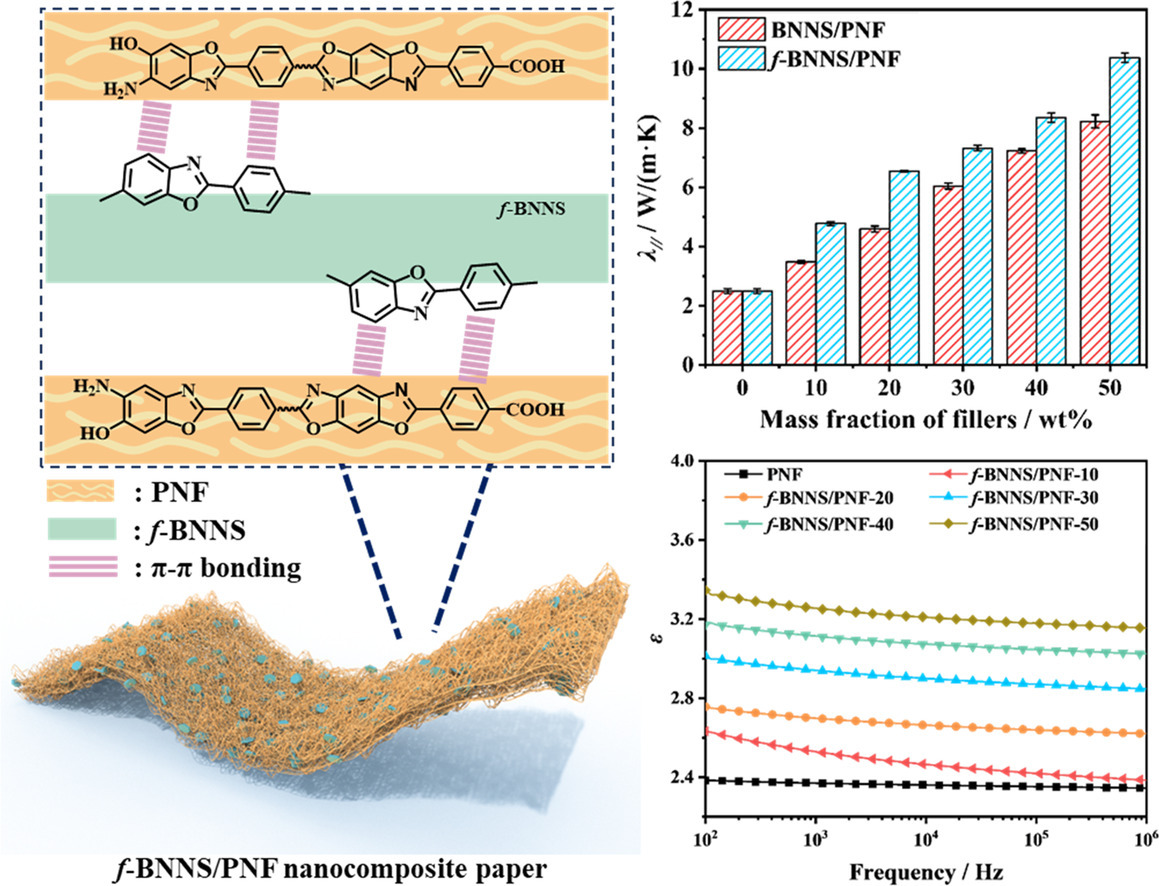
The article reports a pre-PBO-functionalized BNNS/PNF nanocomposite paper designed to reduce interfacial thermal resistance while retaining electrical insulation and mechanical performance.

Selected evidence

Key figures from the article
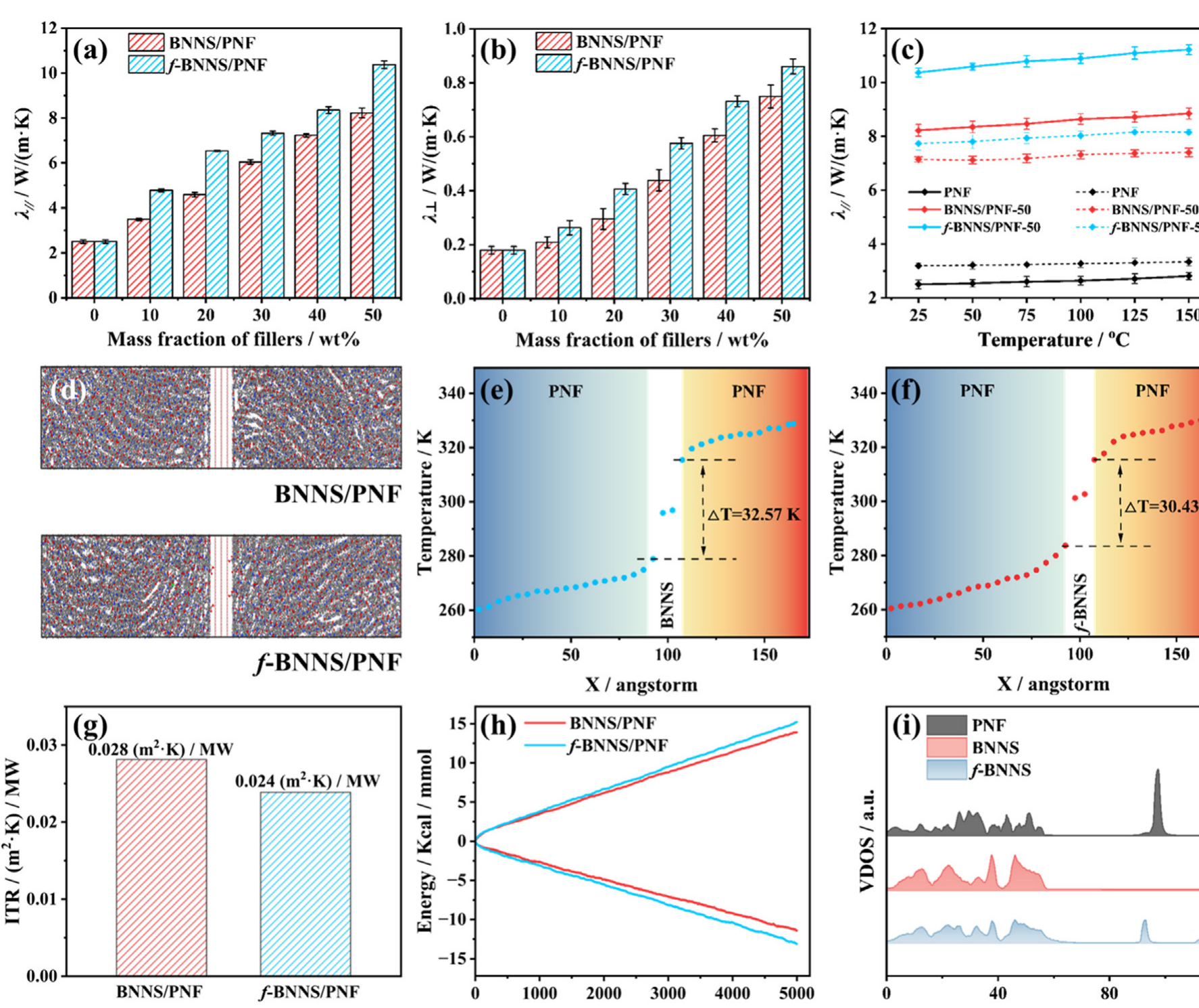
Thermal-conductivity plots, molecular-dynamics models, temperature fields, interfacial resistance, heat spectra, and vibrational-density-of-states curves.
Figure 4. Experimental and simulated evidence for enhanced in-plane thermal transport and reduced interfacial thermal resistance.Original article · PDF page 5
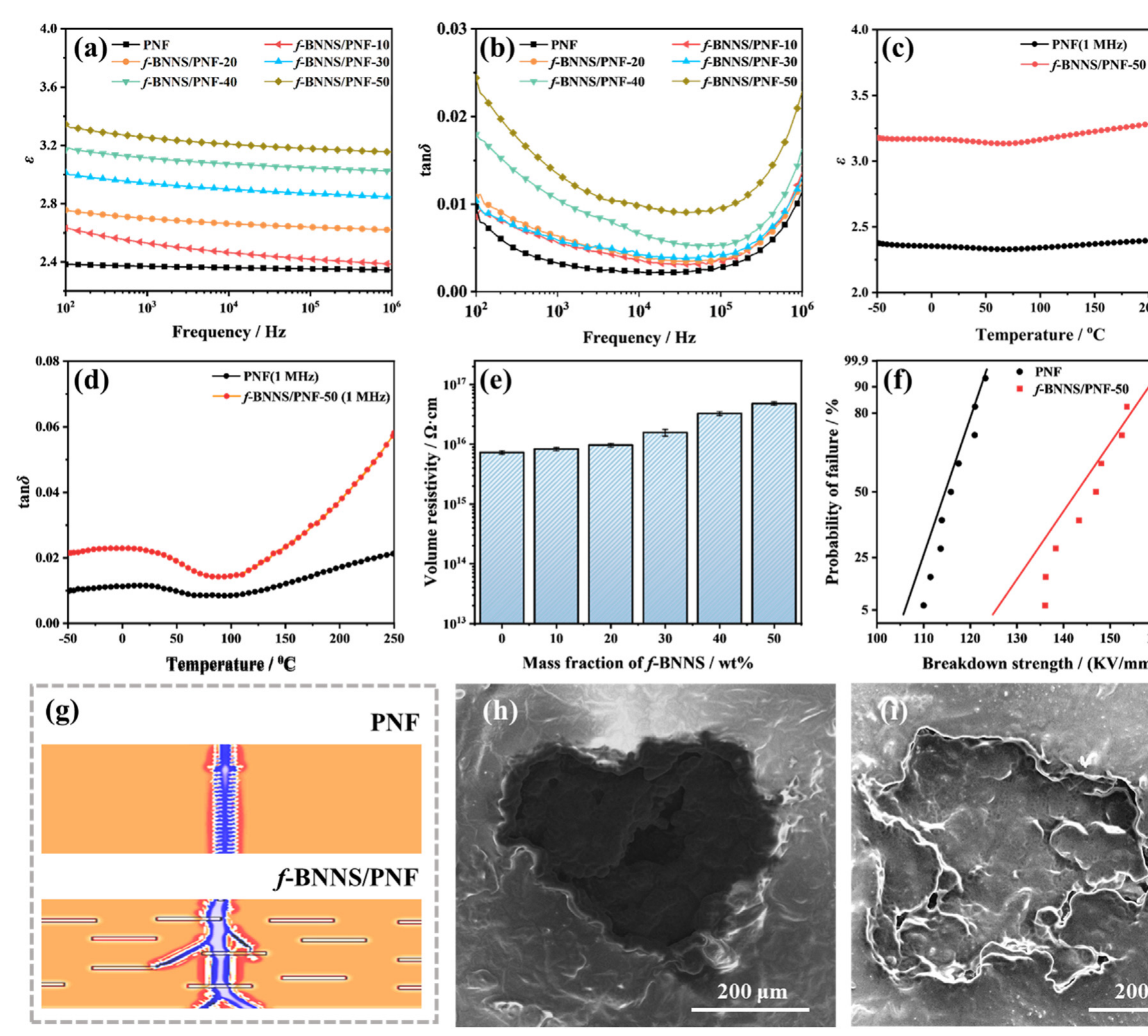
Dielectric constant, loss, volume resistivity, breakdown-strength plots, breakdown schematics, and post-breakdown microscopy.
Figure 6. Electrical-insulation performance across frequency and temperature, including resistivity and breakdown behaviour.Original article · PDF page 7
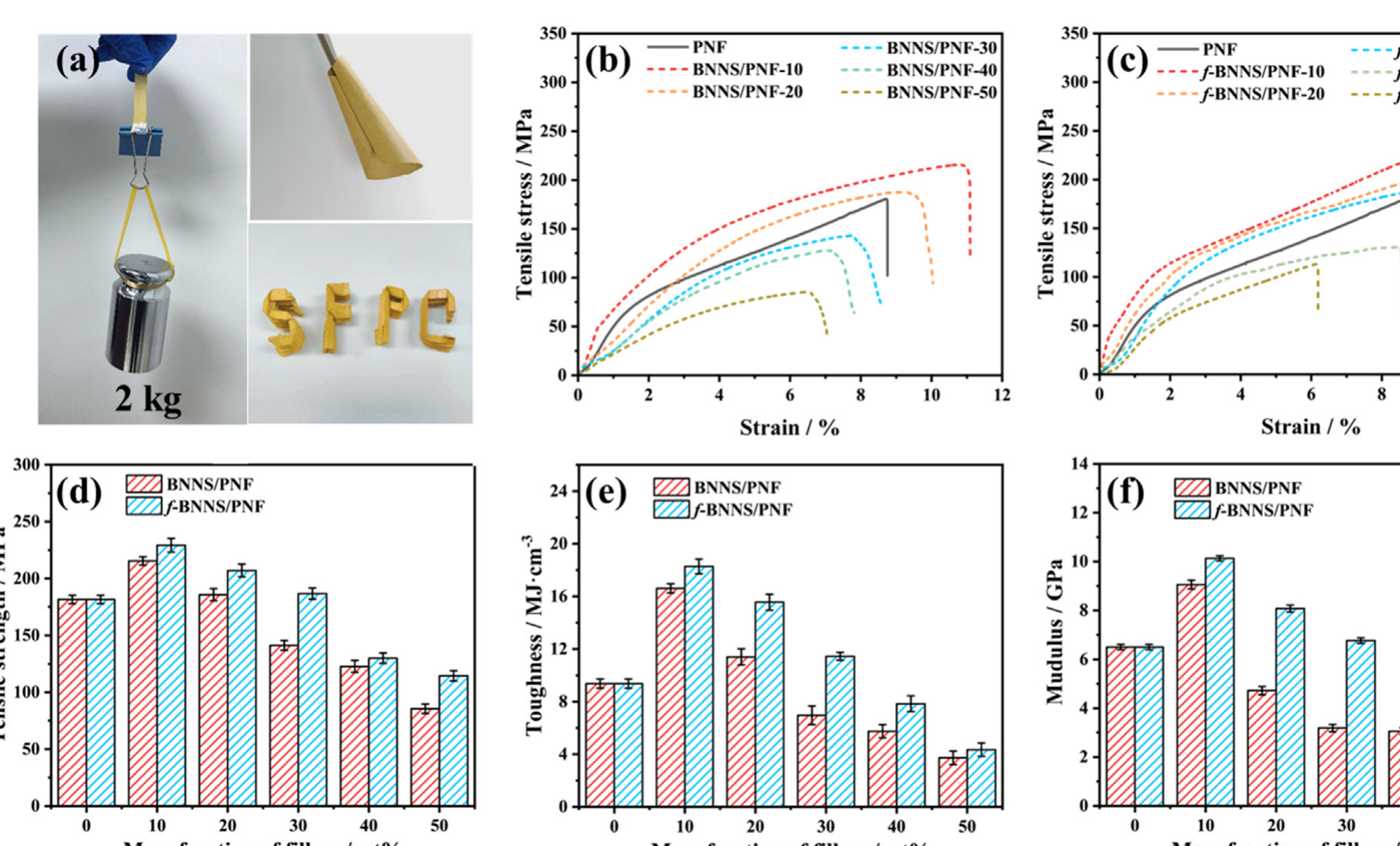
Photographs, stress-strain curves, and plots of tensile strength, modulus, and toughness for BNNS PNF composite papers.
Figure 7. Mechanical performance of the functionalized nanocomposite paper across filler loadings.Original article · PDF page 8